
Decarbonization Experts
From planning to the implementation of decarbonization projects in commercial, industrial, airport, and public buildings, the teams at Equans Services provide comprehensive support at every stage.Decarbonization Experts
From planning to the implementation of decarbonization projects in commercial, industrial, airport, and public buildings, the teams at Equans Services provide comprehensive support at every stage.
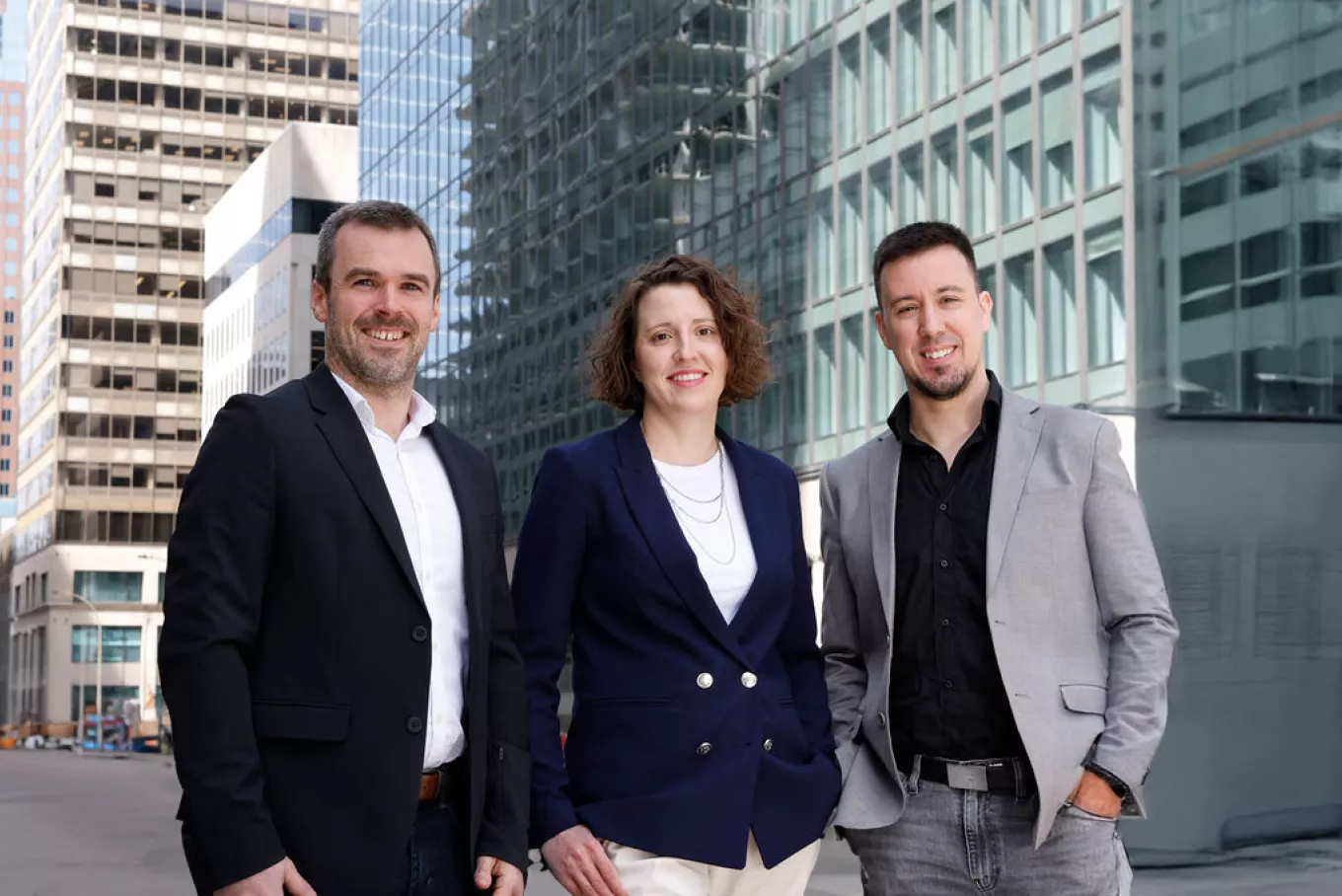
“The time to act is now,” says Claudia Berger, Director of Sustainable Development at Equans Services, emphasizing that the window to reduce harmful emissions is shrinking daily, especially as, for the first time, global warming has exceeded 1.5°C over an entire year. “Tomorrow will already be too late,” she says. “We must act now, especially since subsidies are available, adding a compelling financial incentive to any decarbonization initiative.”
Her colleague Nicolas Lacroix, Director of Energy Projects, adds:
“In Quebec, we are fortunate and well-positioned with financial incentives, energy costs, and available expertise to implement measures that will have tangible, substantial, and lasting impacts.”

"the first challenge is to understand your building."
Jean-Loup Santurette, Director of Innovation and Digital Strategy

"the time to act is now!"
Claudia Berger, Director of Sustainable Development

"quebec provides a strong advantage and is strategically well positioned."
Nicolas Lacroix, Energy Project Director

Energy Sobriety
“Decarbonization starts with energy sobriety. That’s where we must focus first to meet climate change goals. Relying primarily on carbon credit purchases does not constitute a credible strategy,” explains Claudia Berger.
Jean-Loup Santurette, Director of Innovation and Digital Strategy at Equans Services, continues:
“The measures we propose to our clients are prioritized. First, energy sobriety: reducing consumption at the source, similar to waste reduction. Then, reusing excess heat from one area to another where it’s needed. Next, replacing a high-carbon energy source with a lower-carbon one. This last step should only come after the first two. Finally, if needed, carbon offsetting can be used.”
Technology as a Support Tool
Equans Services experts view technology as a support tool for decarbonization. Jean-Loup Santurette mentions automation, smart energy and data management solutions, and AI learning modules to monitor building behavior and identify energy loss causes.
"The first challenge is understanding your building - having reliable, centralized data to produce accurate reports and demonstrate what’s being done," he says.
Technological and digital tools undeniably add value in many ways, as outlined by Jean-Loup Santurette. They enable economic gains by regulating and optimizing building operations, which reduces energy consumption, avoids non-compliance penalties, and lowers the carbon footprint. They also help improve the well-being and comfort of occupants. These tools promote transparency through consistent reporting that demonstrates actions are being taken and that they are producing results; they showcase leadership, even if net-zero has not yet been achieved. Finally, they enhance a building’s reputation with up-to-date certifications that reassure occupants about the company’s environmentally responsible practices.
“Artificial intelligence is an excellent support tool, but it’s important not to assume it can replace human expertise or magically solve every problem,” cautions Nicolas Lacroix. “Reports generated by AI must be reviewed by professionals who understand the building to determine the best actions. The tool itself isn’t inherently intelligent; its value lies in how it’s used. Digital tools assist decision-making, but the final decisions are made by humans, based on processed data and reliable indicators.”


An Optimized and Integrated Approach
“Quality and results are significantly better when the design and construction of a decarbonization system, along with its implementation and optimization, are fully integrated and managed under a single authority,” explains Nicolas Lacroix, citing a recent installation of decarbonization equipment for a client. “We began with planning, supported by Claudia, then moved on to designing the boiler, followed by managing and supervising construction. We are now commissioning and starting up the equipment, and our team will handle ongoing maintenance. In short, we have supported our client from the initial strategic decision through every stage. This is the intervention and support philosophy we advocate.”
Claudia Berger concludes: “It’s important to first assess your energy consumption, then plan actions, implement them, and monitor progress. Our offering, Carbon Shift, integrates all these steps into a structured approach. Our clients have varying levels of energy maturity: some have identified projects, others haven’t. We aim to support them at every phase of this journey, which we see as iterative: always planning and implementing actions to help clients reach their goals.”


Would You Like to Know More About Our Services and Solutions?
Would You Like to Know More About Our Services and Solutions?